Buying Before the Finish Line
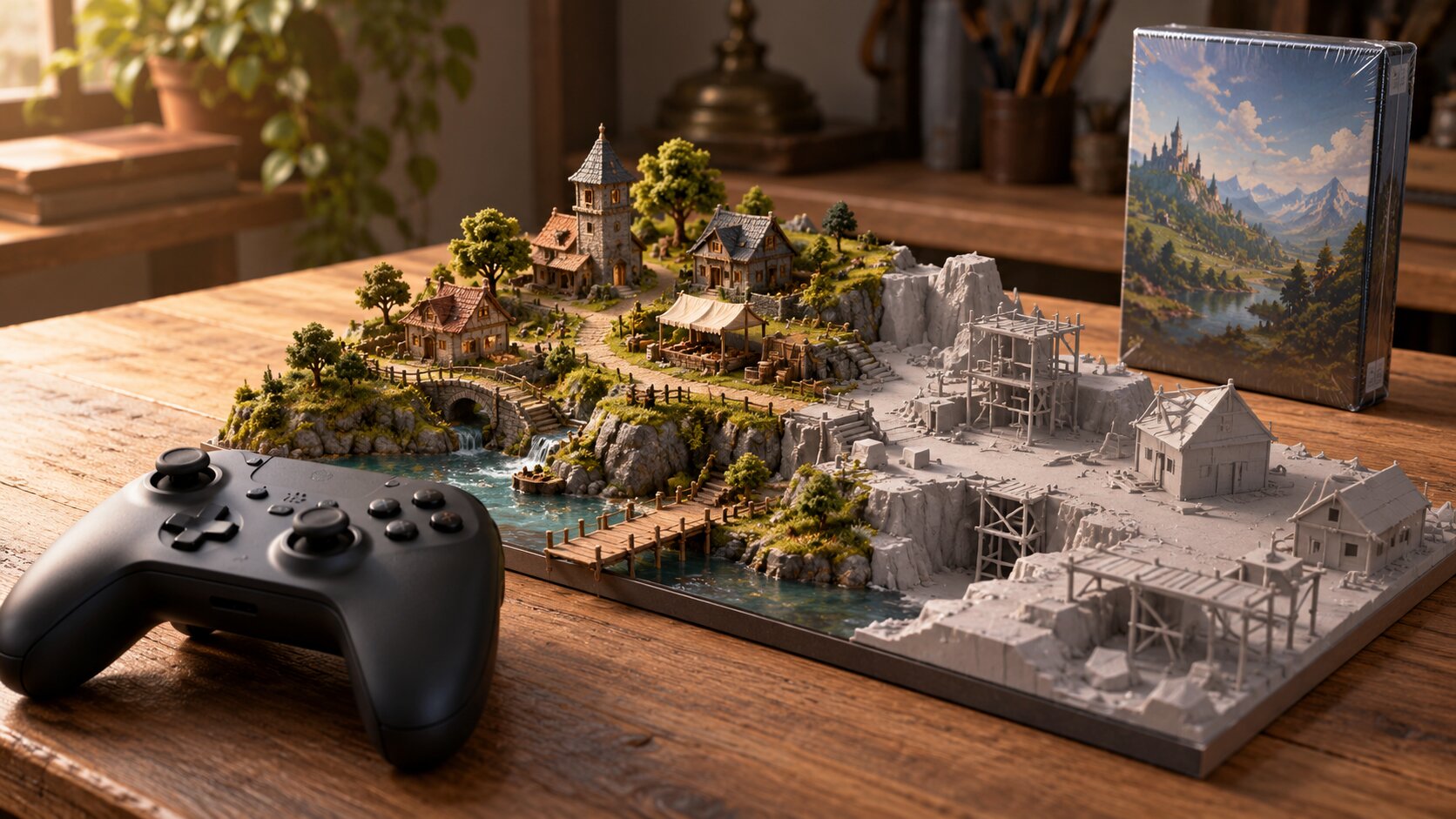
An indie game looks promising. Its screenshots are attractive, the gameplay concept sounds interesting, and the developer has announced that it's available in Early Access.
You can purchase it today, but development isn't finished.
Should you jump in now or wait for the complete release?
That decision is more complicated than buying a conventional finished game. Early Access can give you access to worthwhile gameplay while a developer continues improving features, balancing mechanics, and adding content.
It can also mean bugs, incomplete systems, changing requirements, and uncertain development schedules.
The most useful rule is simple: buy an Early Access game for what it offers today, not solely for what the developer hopes it will become.
Here's how to make that decision without relying on hype.
The Quick Decision
Consider buying an Early Access game now when:
- The existing playable content already interests you.
- The current price feels reasonable for that content.
- You understand which features remain unfinished.
- Your computer meets the current requirements.
- You're comfortable with bugs and gameplay changes.
- You don't need a guaranteed final-release date.
Consider waiting when:
- The features you want are only planned.
- Important systems remain unavailable.
- Stability problems would ruin your experience.
- You prefer finished stories or balanced progression.
- Your hardware compatibility is uncertain.
- You're purchasing mainly because of future promises.
Neither choice is automatically better.
Some players enjoy participating in development. Others want a complete, predictable experience.
What Early Access Actually Means
Steam Early Access allows developers to sell playable games while continuing development.
According to Valve's developer documentation, Early Access is intended for games that already provide meaningful playable content and can benefit from player feedback.
It's not supposed to be a substitute for simply collecting money before a game exists.
Early Access Is Not a Preorder
A preorder generally involves purchasing a game before it becomes available to play.
Early Access provides access to the current playable version immediately after purchase.
The distinction matters because you should evaluate what you're receiving today.
A roadmap promising future areas, characters, or systems is not equivalent to having those features already available.
Early Access Is Not a Demo
A demo usually provides a limited preview of a larger product.
An Early Access purchase generally grants access to the developing game as it evolves.
On Steam, purchasing an Early Access title also provides continued ownership access when it transitions to a full release.
However, that transition is not guaranteed to happen on the originally expected schedule, or at all.
Early Access Is Not Advance Access
Steam distinguishes Early Access from Advance Access.
Advance Access generally refers to playing an otherwise scheduled release earlier through a particular preorder package or edition.
Early Access describes a game that is still under development.
Those are different purchasing arrangements.
Five Things to Check Before Buying
Before spending money, examine five areas.
1. Current Playable Content
Start with the developer's description of the available build.
Find out:
- Which game modes work.
- How much of the world is accessible.
- Whether the main gameplay loop is implemented.
- Which systems remain incomplete.
- Whether multiplayer is currently available, if relevant.
- Whether the game contains meaningful progression.
Avoid evaluating an unfinished title entirely through promotional footage.
The central question is whether the existing content justifies the price.
2. Development Communication
Look for dated development updates and patch notes.
Useful updates might describe bug fixes, new systems, balance changes, or additional playable content.
However, frequent marketing messages aren't necessarily evidence of substantial progress.
A developer posting daily screenshots may be communicating more often than another team, but that doesn't establish which project is developing faster.
Evaluate the substance of updates.
Also remember that a quiet period doesn't automatically mean a project has been abandoned.
3. Roadmap Credibility
Some developers publish roadmaps explaining planned features.
These can provide valuable context.
However, roadmaps aren't contracts guaranteeing every feature or date.
Valve explicitly warns developers against making specific promises that may not be fulfilled.
Look for a clear distinction between:
- Features available now.
- Features currently being developed.
- Tentative future goals.
Don't purchase only because a roadmap contains something you hope to play later.
4. Technical Stability
An unfinished game may include crashes, performance problems, missing options, or compatibility issues.
Check the current system requirements and recent technical feedback.
If you're using integrated graphics, an older laptop, or a Steam Deck, confirm whether the current build supports your configuration.
Future optimization plans shouldn't be treated as present performance improvements.
5. Save Progress and Updates
Some development updates can change save files, progression systems, or item balancing.
Before investing substantial time, check whether the developer warns about potential save incompatibility or progression resets.
This matters particularly for games involving long campaigns, extensive building, or character development.
A major update may improve the game while requiring players to restart portions of their progress.
When Buying Early Makes Sense
Early Access can provide real value when your expectations match the current product.
You Enjoy the Existing Gameplay
The strongest reason to buy now is that the game already offers something you want to play.
Imagine a fictional tactical game with twenty playable missions and a functioning combat system.
The developer plans additional missions later, but the existing experience already interests you.
In that situation, Early Access may be a reasonable purchase.
You Like Providing Feedback
Some players enjoy reporting problems, discussing mechanics, and participating in development communities.
Early Access can provide opportunities for constructive feedback.
However, purchasing a game doesn't guarantee that the developer will implement your suggestions.
You Accept Changing Mechanics
Balancing, interfaces, progression systems, and content can change throughout development.
If you enjoy exploring evolving systems, those changes may be part of the appeal.
The Current Price Is Justified
A game doesn't need to be finished to provide worthwhile entertainment.
But its current price should make sense based on what exists.
Don't assume Early Access is automatically cheaper than the final release.
Developers may change pricing, and no universal discount is guaranteed.
When Waiting Is the Better Choice
Waiting is often the more sensible option when uncertainty would significantly reduce your enjoyment.
The Feature You Want Isn't Available
Suppose a survival game promises cooperative multiplayer but currently supports only solo play.
If you're interested exclusively in playing with friends, buying now may not make sense.
Wait until the feature actually exists and works.
You Prefer Complete Stories
Story-driven games may release content gradually.
If you dislike reaching an unfinished chapter or losing narrative momentum between updates, consider waiting for a complete release.
Stability Is Essential
If crashes, technical problems, or changing save formats would make the game frustrating, Early Access may not suit you.
A finished release isn't guaranteed to be bug-free, but waiting can provide more information about the eventual experience.
Your Gaming Budget Is Limited
If you can only afford one game this month, an unfinished title may be a risky purchase when a complete alternative already offers the gameplay you want.
Consider using your budget on something with more predictable content.
You Want to Avoid Development Uncertainty
Some projects remain in Early Access for extended periods.
Others change direction or never reach a conventional full release.
Waiting reduces the need to make assumptions about future development.
Early Access vs. Demos and Preorders
These purchase models should not be confused.
| Access model | What you receive | Main consideration |
|---|---|---|
| Demo | Limited playable sample | May not represent the final game |
| Early Access | Purchasable unfinished game | Development may change or remain incomplete |
| Preorder | Purchase ahead of availability | Relies on future delivery |
| Advance Access | Earlier access tied to an edition or offer | Terms and timing vary |
| Full release | Game presented as released | Bugs and later updates can still occur |
For someone interested in an upcoming game, an official demo may be a useful first step.
It can help assess controls and gameplay without immediately committing to an Early Access purchase.
Understanding Prices and Refunds
Storefront policies matter when buying unfinished software.
Steam Early Access Refunds
Steam states that Early Access titles remain eligible under its normal refund rules.
For standard qualifying game purchases, the usual Steam refund window is within fourteen days of purchase and less than two hours of playtime, subject to applicable terms.
Do not assume Early Access provides unlimited refund time.
Read the current official policy before buying.
GOG Early Access Refunds
GOG also offers games in development.
Its published Early Access FAQ describes a 30-day refund policy for these titles, including games that have been downloaded and played.
Refund requests remain subject to the current terms and procedures.
GOG also describes rollback functionality through GOG GALAXY for supported games, which can be useful when an update introduces problems.
Storefront features and terms can change, so verify the details relevant to your purchase.
Will the Price Increase After Release?
Possibly, but not necessarily.
Some developers may adjust pricing as content expands. Others may retain or reduce prices.
Do not buy merely because you fear a future price increase.
A speculative discount compared with an unknown future price isn't guaranteed savings.
A Practical Buy-or-Wait Scorecard
Use this simple framework before making a purchase.
Score each factor from zero to two.
| Factor | 0 points | 1 point | 2 points |
|---|---|---|---|
| Current content | Little you want | Some appeal | Already worth playing |
| Stability | Serious concerns | Uncertain | Acceptable for your needs |
| Development information | Unclear | Partial | Substantive and current |
| Compatibility | Unsuitable | Uncertain | Requirements satisfied |
| Price and value | Poor fit | Borderline | Worth its present cost |
Maximum score: 10.
This is a personal decision aid, not a scientific quality rating.
8–10: Consider Buying
The game may be a good candidate if it already offers sufficient value and you're comfortable with unfinished development.
5–7: Investigate Further
Read additional feedback, examine available demonstrations, and check recent updates.
0–4: Waiting Is Usually Sensible
The current game may not provide enough certainty or value for your needs.
A lower score doesn't establish that the developer is unreliable.
It simply means the available product isn't currently a strong purchase for you.
Example: Two Fictional Indie Games
Imagine two hypothetical games.
Ashfield Tactics currently includes several playable campaigns, functioning combat, and a clear list of planned additions.
Starbound Frontier advertises a large cooperative universe, but its current build only includes a limited solo prototype.
If you want tactical gameplay, the first might justify an Early Access purchase today.
If you're interested primarily in cooperative exploration, waiting for the second could be wiser.
The decision comes from the available experience, not the size of the promise.
How to Avoid Common Mistakes
Mistake: Buying Only to Support the Developer
Supporting independent creators is a legitimate personal choice.
However, an Early Access purchase remains a commercial transaction.
Better approach: Understand the current product and accept the possibility that development may not achieve every planned goal.
Mistake: Treating the Roadmap as Guaranteed
Future features and schedules may change.
Better approach: Separate currently implemented content from development intentions.
Mistake: Assuming All Early Access Games Are Discounted
There is no universal Early Access discount.
Better approach: Evaluate the current purchase price without relying on hypothetical future pricing.
Mistake: Ignoring Recent Technical Feedback
A game may change substantially from one build to another.
Better approach: Prioritize feedback that identifies the relevant game version and system configuration.
Mistake: Expecting a Finished Experience
An Early Access game can be playable while lacking content, polish, or final balancing.
Better approach: Buy only when you're comfortable with its unfinished state.
Mistake: Confusing Long Development With Failure
A lengthy Early Access period doesn't establish that a project is unsuccessful.
Better approach: Examine actual progress and current functionality instead of judging solely by elapsed time.
Final Buying Checklist
Before purchasing an Early Access game:
- Read the developer's Early Access explanation.
- Identify what is playable now.
- Separate existing features from future plans.
- Check recent development updates.
- Review stability and technical feedback.
- Confirm hardware and operating-system requirements.
- Look for warnings about save compatibility.
- Evaluate the current price.
- Read the storefront's refund policy.
- Decide whether the existing experience is worth owning.
The most important question is not whether the finished game could someday become excellent.
It's whether you'd still be satisfied with your purchase if development stopped tomorrow.
If the answer is yes, buying during Early Access may make sense.
If the answer is no, waiting is usually the better choice.
A promising game can remain on your wishlist until it offers the experience you actually want.
Frequently Asked Questions
Is an Early Access game the complete game?
Usually not. Early Access titles are still being developed and may lack planned features, content, or final balancing.
Do I have to buy an Early Access game again when it launches?
Steam states that purchasers retain access as a game transitions from Early Access to full release.
Can an Early Access game remain unfinished?
Yes. Valve specifically cautions that some projects may not reach a completed release.
Are Early Access games cheaper?
Not necessarily. Developers set their pricing and may change it over time.
Can I refund an Early Access game?
Refund options depend on the storefront and applicable purchase terms. Steam applies its normal refund rules, while GOG publishes a separate 30-day Early Access refund policy.
Is Early Access a good way to support indie developers?
It can be, provided you understand the current product and development uncertainty. Financial support does not guarantee completion or particular future features.
Official Early Access Resources
- Steam Early Access Guidelines - Developer obligations and rules for unfinished games.
- Steam Early Access Support - Buying advice, reviews, development uncertainty, and refunds.
- GOG Early Access FAQ - Games in development, refunds, and platform features.
By: Rex Iriarte
Last updated: October 18, 2026
Early Access Purchase Note
Early Access games are unfinished products. Development schedules, features, prices, technical requirements, and storefront terms may change. This article provides a purchasing framework, not a guarantee of completion, performance, future content, or refund eligibility.
0 comments:
Post a Comment