Buying a Game Before It's Finished
You discover an indie game with a fantastic premise.
Maybe it's a farming RPG with mysterious underground ruins, a survival game with enormous creatures, or a city builder that lets you construct an entire civilization on something unexpected.
The screenshots look promising. The trailer is exciting.
There's just one complication: the game is in Early Access.
You can buy it today, but development isn't finished.
That raises an important question. Should you jump in now or wait for the complete version?
Early Access can be a wonderful way to discover experimental games and participate in their development. It can also mean encountering missing features, performance problems, unfinished stories, and changing gameplay systems.
The right answer depends on what you want from the game today, not simply what its developers hope to deliver tomorrow.
Here's how to decide without relying on hype.
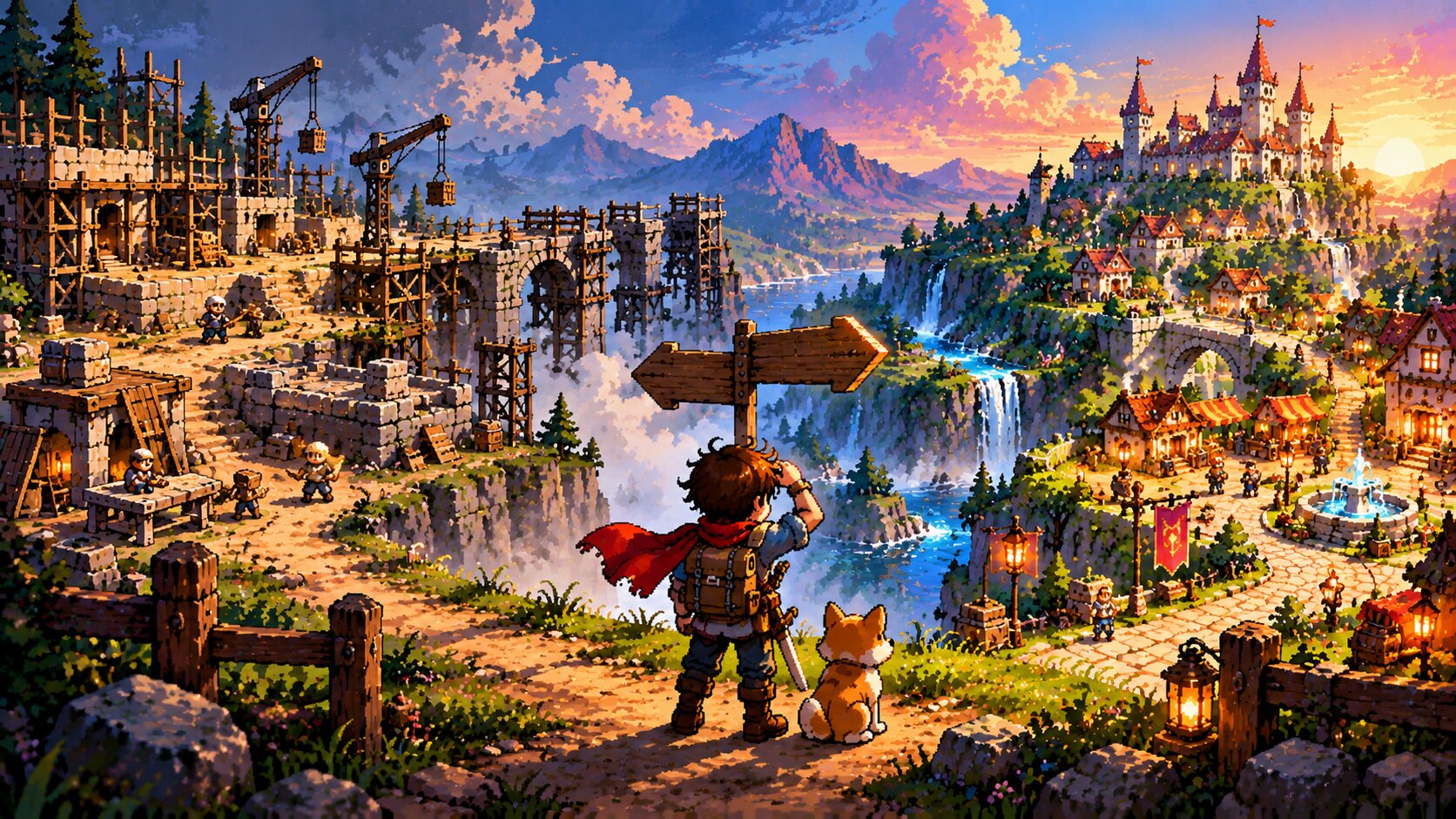
The Short Answer
Buy in Early Access when the game already offers enough enjoyable content to justify its current price.
Wait for version 1.0 when your interest depends on features, improvements, or content that have not yet arrived.
| Your Situation | Better Choice |
|---|---|
| You enjoy experimental games | Consider Early Access |
| The current content already appeals to you | Consider Early Access |
| You want a complete story | Wait for 1.0 |
| You need stable performance | Wait for reliable evidence |
| Your favorite feature isn't implemented | Wait |
| You enjoy reporting bugs and suggesting changes | Consider Early Access |
| You're unsure about the gameplay | Try a demo or wait |
Early Access isn't inherently good or bad.
It's a different purchasing arrangement with different expectations.
What Early Access Actually Means
Steam Early Access allows developers to sell a playable game while development continues.
That is different from pre-ordering a game that cannot yet be played.
Players receive access to the available build and can follow updates as development progresses.
Developers may use feedback to refine mechanics, balance systems, improve performance, and determine future priorities.
However, development plans can change.
Some games eventually reach a complete 1.0 release. Others remain unfinished for extended periods, change direction, or never receive every planned feature.
Steam explicitly advises developers not to sell Early Access games based on promises about the future.
The current game should already provide meaningful value.
Early Access Isn't the Same as Advance Access
The terminology can be confusing.
Early Access: An unfinished game sold while development continues.
Advance Access: Early playtime granted before a scheduled release, often through a pre-purchase edition.
A deluxe edition offering three days of early play doesn't automatically mean that the game follows the Early Access development model.
Understanding that distinction prevents unrealistic expectations.
Seven Things to Check Before Buying
1. Is the Current Game Actually Enjoyable?
Start with the most important question.
If development stopped tomorrow, would you still feel comfortable with the purchase?
Imagine a $20 indie RPG offering five enjoyable hours of exploration, combat, and crafting.
If those five hours already satisfy you, Early Access might be worthwhile.
But if you only want the game because its developer promises a huge future campaign, you're buying an expectation.
Treat future content as a possible bonus, not something you already own.
2. How Much Content Is Available?
A feature list doesn't necessarily tell you how much you can actually do.
Look for specific information about:
- Available levels or regions.
- Playable classes or characters.
- Story progression.
- Crafting and building systems.
- Current game modes.
- Replayability.
- Known content limitations.
A survival game with a large world but few activities can feel less complete than a smaller game with tightly designed mechanics.
Gameplay quality matters more than map size.
3. Is Development Still Active?
Check the developer's recent announcements and patch history.
Are updates addressing bugs and improving the game?
Does the developer explain changes clearly?
Are major problems acknowledged?
A game receiving thoughtful updates may inspire more confidence than one whose public development history has gone quiet.
However, don't confuse frequent announcements with meaningful progress.
A detailed monthly update that fixes serious problems may matter more than daily promotional posts.
Steam may also display a notice when an Early Access game has gone more than 12 months without both a game update and a qualifying developer update announcement.
That notice is a reason to investigate, not automatic proof of abandonment.
4. What Features Are Still Missing?
Read the game's Early Access questionnaire on Steam.
Developers should explain the current state of the game and their intentions for the full release.
Separate features into three categories.
| Category | Meaning | Buying Implication |
|---|---|---|
| Available now | Already playable | Can justify today's purchase |
| Planned | Announced for later | Should not determine current value |
| Unconfirmed | No reliable commitment | Do not assume it will arrive |
Be especially cautious when a missing feature is central to your enjoyment.
For example, don't buy a single-player game expecting future cooperative multiplayer unless you're already comfortable owning it without that feature.
5. Can Your Computer Run the Current Version?
Optimization often changes during development.
A game might perform well today and encounter problems after an update, or improve significantly over time.
Check the published minimum and recommended specifications.
Look for recent performance reports using your actual CPU and GPU.
If you use integrated graphics, don't assume pixel art or simple environments guarantee compatibility.
Where possible, test a demo before purchasing.
6. Could Updates Affect Your Progress?
Early Access changes may alter progression systems, character builds, world generation, or saved-game compatibility.
Major updates sometimes require players to restart.
For some players, beginning a new world is part of the fun.
For others, losing dozens of hours of progress would ruin the experience.
Check whether the developer discusses save compatibility and major update plans.
If your enjoyment depends on keeping one long-term save, waiting may be the safer choice.
7. Is the Price Worth the Current Content?
An Early Access discount can be appealing.
However, a lower price doesn't automatically create good value.
Consider what the available game provides today.
Would you pay the asking price if no additional content arrived?
If the answer is no, the discount may simply encourage an early purchase you don't need.
Also, don't assume the price will rise at version 1.0. Developers can choose different pricing strategies.
Early Access vs. Version 1.0
There are advantages and disadvantages to each approach.
| Factor | Buy in Early Access | Wait for Version 1.0 |
|---|---|---|
| Immediate access | Yes | No |
| Development feedback | Opportunity to participate | Less influence on early design |
| Content completeness | Usually unfinished | Intended full-release scope |
| Stability | May vary between builds | Not automatically bug-free |
| Features | May change considerably | More established |
| Save compatibility | Updates may disrupt progress | Generally more settled, but not guaranteed |
| Pricing | Current Early Access price | Future price may differ |
| Risk | Greater development uncertainty | More information before purchase |
Notice that version 1.0 doesn't guarantee perfection.
Completed games can still contain bugs or receive substantial updates.
The advantage of waiting is that you can evaluate a more established product using additional information.
Three Common Buying Scenarios
Scenario A: The Experimental Sandbox
A $15 sandbox already offers several creative systems, multiple environments, and substantial replayability.
The developer plans more content, but the existing experience appears enjoyable.
Decision: Early Access could be reasonable if the current features justify the price.
Scenario B: The Unfinished Story RPG
A $25 narrative RPG currently contains only its opening chapters.
The developer promises additional regions and a complete story later.
You primarily enjoy RPGs for their conclusions.
Decision: Waiting for version 1.0 makes more sense.
Scenario C: The Demanding Simulation
A $20 management game offers intriguing mechanics but has mixed performance reports on hardware similar to yours.
The developer says optimization is planned.
Decision: Wait for confirmed improvements or trustworthy performance evidence.
These are hypothetical examples, not descriptions of specific products or firsthand tests.
When Waiting Is the Better Choice
Waiting isn't missing out.
It can be the most practical way to enjoy a game.
Consider postponing a purchase when:
- The current build lacks essential features.
- Development updates are unclear or infrequent.
- Performance reports raise concerns.
- You want a finished narrative.
- Major progression changes are expected.
- The developer has not explained current limitations.
- You already have unfinished games in your library.
Wishlisting is useful because it lets you revisit the game when updates, discounts, or the full release make the decision easier.
Don't Rely Entirely on Refunds
Steam's standard refund policy generally allows requests within 14 days of purchase and with less than two hours of playtime.
Additional conditions and exceptions apply.
Early Access playtime counts toward the relevant playtime limit.
A refund policy can reduce purchasing risk, but it shouldn't replace careful research.
Check the current official policy before relying on eligibility.
A Practical 10-Point Scorecard
Use this short evaluation before buying an unfinished indie game.
Give one point for every statement you can confidently answer yes.
| Question | Point |
|---|---|
| The current gameplay interests me | 1 |
| Enough content is playable now | 1 |
| I understand what's unfinished | 1 |
| The developer communicates clearly | 1 |
| Recent development progress is evident | 1 |
| My computer meets the requirements | 1 |
| Performance evidence is acceptable | 1 |
| I'm comfortable with possible save changes | 1 |
| The current price feels fair | 1 |
| I'd still enjoy it without future additions | 1 |
Interpreting Your Score
8–10 points: A reasonable Early Access candidate. Review any remaining concerns before purchasing.
5–7 points: Some important uncertainties remain. Investigate further or consider waiting.
0–4 points: Waiting is likely the more sensible choice.
This is an editorial decision aid, not a scientific rating or quality score.
Some concerns should override the total.
For instance, if your computer cannot run the game or its main advertised activity isn't available yet, a high score elsewhere doesn't solve that problem.
Make the Purchase That Fits You
Early Access offers something valuable: the opportunity to experience creative games while they're still evolving.
For players who enjoy experimentation, development updates, and participating in community feedback, that can become part of the entertainment.
But no one needs to buy an unfinished game to demonstrate support for independent developers.
Waiting for version 1.0, purchasing after reviews, or simply adding the game to a wishlist are equally legitimate choices.
The central rule is simple: Buy the game that exists today, not the imaginary perfect version you hope will exist tomorrow.
If the current experience already looks worthwhile, Early Access may be a good fit.
Otherwise, patience can be the smartest upgrade to your gaming library.
Frequently Asked Questions
Do Early Access buyers get version 1.0?
On Steam, buying an Early Access title provides continued access as it moves toward full release, including version 1.0 if released.
Does every Early Access game eventually get finished?
No. Development may be delayed, changed, or discontinued.
Should I wait if the game has negative reviews?
Read recent reviews carefully. Identify whether complaints involve missing features, persistent bugs, poor performance, or subjective preferences.
Is Early Access always cheaper?
No. Pricing varies by developer, and future prices aren't guaranteed to be higher.
Official Steam Guidance
- Steam Early Access FAQ, Guidance on Early Access purchases, development expectations, and refunds.
- Steam Refund Policy, Official refund conditions and exceptions.
By: Marco Medalla Contributor: Retro Nation Published: October 18, 2026
Disclosure: Research-based editorial guidance. The hypothetical buying scenarios are examples, not documented personal purchases or tests.
Reference
- Valve Steamworks Early Access Documentation, Developer obligations, current-build expectations, and Early Access rules.
0 comments:
Post a Comment