Why the Past Still Captivates Us
Remember the sound of a dial-up modem, the satisfying click of a cassette player, or the excitement of inserting a game cartridge into a console?
Even if those experiences happened before your time, there's something fascinating about the technology, entertainment, and everyday objects of previous generations.
Retro culture brings these experiences into the present. It gives us an opportunity to revisit forgotten designs, rediscover classic entertainment, and understand how yesterday's innovations influenced today's world.
You don't need to have grown up in the 1980s or 1990s to appreciate retro culture. Curiosity is enough.
Retro Culture at a Glance
Retro culture is the appreciation, revival, or reinterpretation of styles, technologies, entertainment, and trends associated with earlier periods.
It can involve collecting original objects, restoring old equipment, enjoying classic media, or incorporating historical influences into modern life.
A few things worth knowing:
- Who can enjoy it? Anyone interested in history, technology, entertainment, design, or collectibles.
- Where should beginners start? With something personally interesting rather than something expensive.
- Does retro mean old? Not necessarily. Newly manufactured products can intentionally reproduce older styles.
- Do you need original equipment? No. Reissues, digital archives, museums, and modern alternatives can provide accessible starting points.
- What matters most? Understanding and enjoying what makes an earlier era distinctive.
Retro culture is not one hobby. It's a collection of connected interests.
What Does Retro Actually Mean?
The word "retro" generally refers to styles, objects, or experiences that recall an earlier period.
A modern radio designed to resemble a 1950s model can be retro. So can a newly developed video game that imitates the pixel art and limitations of an older console.
An original radio manufactured in the 1950s is better described as vintage or antique, depending on its age and how the term is being used.
These categories overlap, but they describe different relationships with the past.
Nostalgia Is Only Part of the Story
For some people, retro culture reconnects them with childhood memories.
For others, it introduces unfamiliar inventions and creative ideas.
A teenager discovering a Nintendo Entertainment System for the first time is experiencing retro gaming without necessarily feeling personal nostalgia for the 1980s.
That's one of the most interesting aspects of retro culture: old technology can offer entirely new experiences to someone encountering it for the first time.
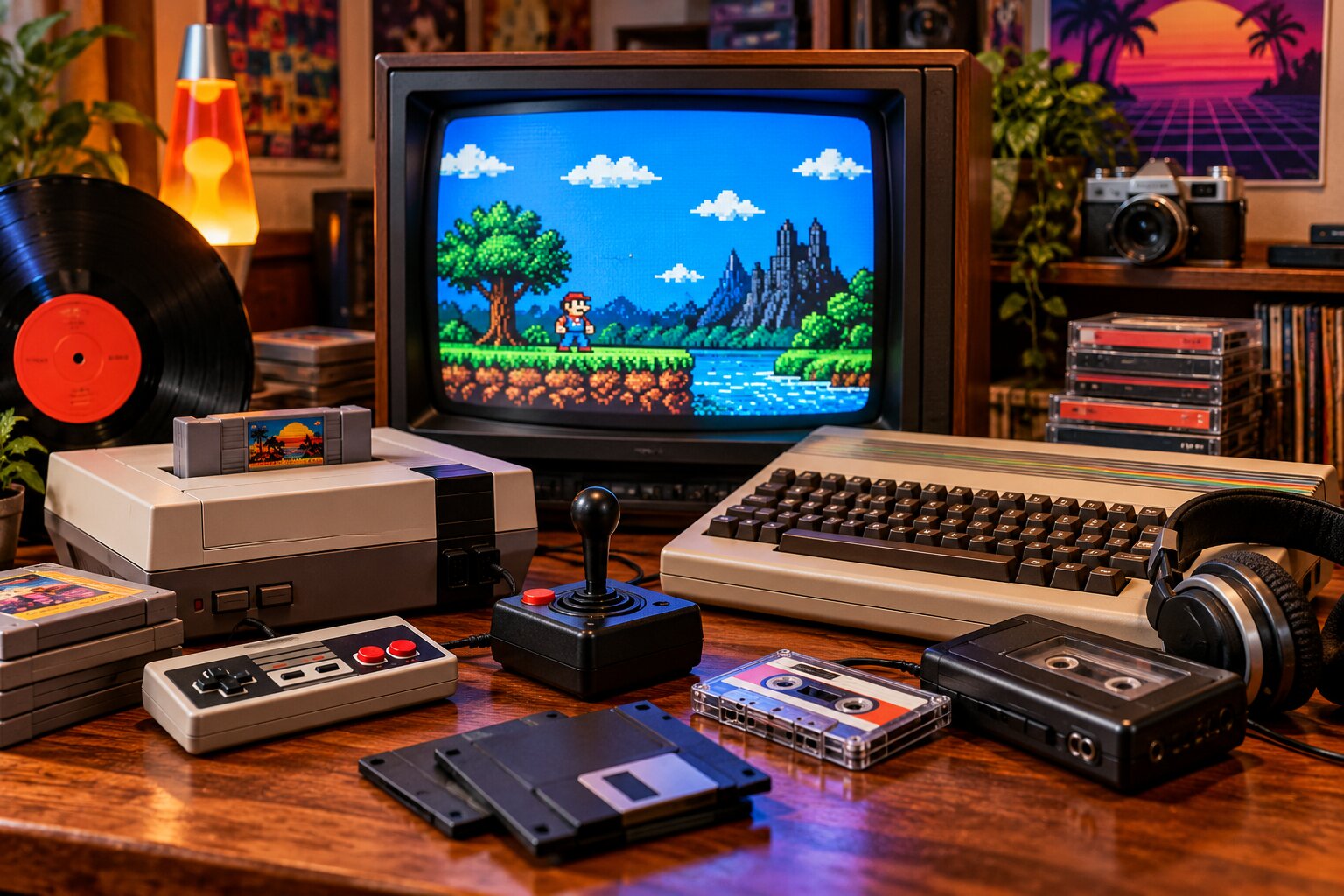
The Major Worlds of Retro Culture
Retro culture stretches across many categories, and each provides a different way to explore the past.
Classic Video Games
Retro gaming encompasses older consoles, arcade machines, handheld systems, computers, and the games created for them.
Systems such as the Atari 2600, Nintendo Entertainment System, Sega Genesis, Super Nintendo, and original PlayStation represent different stages in gaming history.
Their graphics may look simple by modern standards, but their games helped establish familiar mechanics, genres, and approaches to interactive entertainment.
Some enthusiasts collect original cartridges and hardware. Others enjoy officially reissued games or modern systems that recreate classic experiences.
Retro gaming can therefore be both a collecting hobby and an accessible way to study the development of entertainment technology.
Vintage Computers and Electronics
Before smartphones and cloud services became commonplace, computing was often a hands-on experience.
Machines such as the Commodore 64, Apple II, IBM PC compatibles, and early Macintosh computers introduced generations of users to personal computing.
These systems reveal how much could be accomplished with limited memory, processing power, and storage.
Old electronics also offer valuable lessons about repairability, compatibility, and design.
For example, comparing a floppy disk with modern solid-state storage makes changes in capacity, reliability, and convenience easier to appreciate.
Music and Physical Media
Vinyl records, cassette tapes, compact discs, and early portable music players remain important elements of retro culture.
Physical media encourages a different relationship with music.
Album artwork, packaging, liner notes, and the process of selecting a record or tape can become part of the listening experience.
That doesn't mean older formats are automatically superior.
Streaming is convenient, searchable, and portable. Physical media, meanwhile, can provide an enjoyable sense of ownership and interaction.
The choice comes down to what listeners value.
Fashion, Design, and Everyday Life
Retro influences appear in clothing, furniture, typography, advertising, photography, and interior design.
Mid-century furniture, colorful 1970s patterns, 1980s electronic aesthetics, and 1990s streetwear all illustrate how distinctive design movements can return.
Sometimes those styles reappear in recognizable forms. Other times, designers combine historical influences with contemporary materials and functionality.
A modern product with an old-fashioned appearance demonstrates that retro culture is not limited to preserving original objects.
It can also inspire new creative work.
Why Are Retro Things Popular Again?
Several motivations help explain the continuing appeal of retro culture.
A Connection to Personal History
Familiar objects can remind people of family gatherings, favorite games, childhood bedrooms, and earlier experiences.
A particular sound, photograph, or electronic device may bring back memories more effectively than a written description.
Curiosity About Simpler Technology
Modern devices often conceal their internal processes behind streamlined interfaces.
Older systems can make those processes more visible.
A cassette recorder, mechanical keyboard, or early computer may invite users to understand how its components work.
However, simplicity does not always mean convenience.
Older electronics may require maintenance, specialized connections, replacement parts, or technical knowledge.
Appreciation for Earlier Design
Products from past decades often reflect the materials, manufacturing methods, and visual trends of their period.
Studying these details provides useful insight into both cultural history and industrial design.
The Joy of Rediscovery
An old game, forgotten album, or discontinued gadget can still be enjoyable without being technologically competitive.
Sometimes the appeal comes from limitations that encouraged distinctive creative solutions.
At other times, it's simply fun to discover something unfamiliar.
Retro Versus Vintage: Understanding the Difference
The terms retro, vintage, and antique are often used interchangeably, but they're not identical.
| Term | General meaning | Example |
|---|---|---|
| Retro | Inspired by an earlier style or experience | A modern pixel-art video game |
| Vintage | An original item from an earlier period | A functioning 1980s cassette player |
| Antique | An older collectible, often 100 years old or more | An early 20th-century radio |
| Reproduction | A newer copy or recreation of an older item | A replica of a classic arcade cabinet |
The boundaries vary between collecting communities.
A product listing described as retro may refer to an original object, a modern reproduction, or merely an older-looking design.
When shopping, it's worth checking the manufacturing date, model number, condition, and authenticity rather than relying on descriptive labels alone.
How to Explore Retro Culture Without Overspending
Getting started doesn't require building a large collection.
In fact, buying equipment before understanding what interests you can lead to unnecessary expenses.
Consider the following example.
A Beginner's Retro Gaming Weekend
Imagine someone who wants to learn why 1990s video games still have enthusiastic fans.
Instead of immediately purchasing an original console, several games, and an expensive display, they could take a more practical approach.
Day One: Explore
Research a few popular titles from the period, watch historical gameplay footage, and learn which platforms originally supported them.
Day Two: Experience
Try a legitimately available classic-game reissue, visit an arcade or gaming museum, or play a modern game inspired by the era.
Afterward, decide whether the interest is primarily in playing the games, collecting the hardware, or understanding gaming history.
This approach costs little or nothing beyond any chosen admission or game purchase, and it can prevent impulsive purchases.
The same strategy works for vinyl records, old cameras, and vintage computers.
Start with curiosity. Invest only after discovering what you genuinely enjoy.
Common Mistakes New Collectors Make
Retro hobbies can become expensive or frustrating when purchases are made without preparation.
Buying Based on Appearance Alone
A beautiful vintage electronic device might not function.
Cosmetic condition is only one factor. Internal components, power requirements, previous repairs, and missing accessories can significantly affect usability.
Assuming Old Means Valuable
Age alone does not establish collectibility.
Demand, condition, rarity, provenance, and completeness can influence resale value.
Some older products are common and inexpensive. Others are rare but have limited demand.
Research completed sales rather than relying entirely on asking prices.
Forgetting Compatibility
Older game consoles and computers may not connect directly to modern displays.
Some require adapters, signal converters, replacement cables, or additional equipment.
Before purchasing, check which connections and accessories are needed.
Overlooking Safety and Maintenance
Aging power supplies, damaged cables, leaking batteries, and deteriorating capacitors can create hazards.
Avoid connecting questionable equipment to power without appropriate inspection.
Specialized repairs, particularly those involving high voltages, should be handled by qualified technicians.
Confusing Preservation With Piracy
Preserving gaming and computing history matters, but not every downloadable game, ROM, software archive, or recording is legally distributed.
Official reissues, authorized collections, museums, and legitimate digital storefronts are useful starting points.
Historical interest does not automatically grant permission to distribute copyrighted material.
Building Your Own Retro Experience
A rewarding retro hobby should reflect personal interests rather than pressure to own expensive or fashionable collectibles.
Use this beginner's checklist:
- Choose one area, such as classic games, music, computers, cameras, or design.
- Pick a decade or technological period to explore.
- Learn about three influential products or works from that period.
- Identify legitimate ways to experience them before purchasing originals.
- Set a spending limit for your first purchase.
- Research maintenance, compatibility, and replacement parts.
- Document what you discover, including interesting historical details.
- Expand your collection or interests gradually.
You may eventually find that collecting is not even necessary.
Exploring digital museums, listening to older recordings, studying industrial design, or learning about early computing can be equally rewarding.
The Past Has Plenty Left to Offer
Retro culture connects technological history, personal memories, creative design, and entertainment across generations.
It reminds us that progress doesn't make every older idea irrelevant. Some innovations become foundations for future inventions. Others remain interesting because they reflect the limitations and choices of their time.
Whether you're interested in rediscovering a favorite childhood console, exploring vintage computers, or learning why certain design trends keep returning, there is always another chapter of the past worth discovering.
What would you explore first: classic video games, vintage technology, old-school music, or retro design?
Share your favorite era or discovery in the comments.
Frequently Asked Questions
Does retro always mean something is old?
No. Retro may describe a modern product influenced by earlier designs. Vintage generally refers to an original item from a previous period.
Is retro gaming expensive?
It doesn't have to be. Official reissues, digital collections, and modern retro-inspired games can provide inexpensive starting points. Original hardware and rare collectibles may cost considerably more.
What decade is considered retro?
There is no universally accepted cutoff. Retro commonly describes earlier eras that remain culturally recognizable, although the specific decades change over time.
Can modern technology be retro?
Yes. Modern speakers, games, cameras, and other products can adopt historical design elements while using contemporary technology.
Explore More Retro History
- Computer History Museum, Exhibits and historical resources about computing.
- Internet Archive, Digital collections of historical media and cultural materials.
- The Strong National Museum of Play, Research and exhibits on the history of games and play.
By: RetroNation Last updated: October 17, 2026
Editorial Note
Product examples are provided for historical and educational context. References to trademarks, platforms, and products do not imply affiliation or endorsement.

0 comments:
Post a Comment